
PrecisionChrome Delete
Chrome delete wraps factory-bright trim in conformable vinyl for a blacked-out, modernized look. We use Avery Dennison Supreme Wrapping Film and 3M 2080 specifically formulated for tight radii around window seals, grille inserts, and emblem recesses. Every piece is heat-formed to follow OEM contours — not stretched over them — so it stays bonded through Dallas-Fort Worth's extreme heat cycles.
Preview Your Chrome Delete
Curious how your vehicle looks blacked out? Upload a photo and our AI instantly removes all chrome trim — giving you a realistic preview of the sleek, modern result.
Configuration
V 0.11Vehicle
2What Gets Removed
- Window surrounds & trim
- Grille accents & emblems
- Door handles & mirror caps
- Roof rails & side moldings
Chrome Delete Packages
Whether you want subtle window trim blacking or a complete chrome elimination, we tailor every job to your vehicle's specific trim layout.
Window Surround Delete
We wrap all chrome window trim and pillar covers in satin or gloss black Avery Dennison vinyl. Each piece is heat-formed around the window rubber seal for a factory-integrated finish — not adhesive-taped over the top like cheap alternatives.
Full Chrome Delete
The complete blackout — every chrome element on your vehicle wrapped in premium cast vinyl. Window surrounds, grille accents, emblems, door handles, mirror caps, roof rails, and lower body trim. We remove pieces where possible for wrapped-edge finish.
Grille & Emblem Blackout
Front-facing chrome elimination for maximum visual impact. Grille inserts get individual piece wrapping (not stretched over), and emblems are hand-contoured with heat for a debadged, aggressive aesthetic.
The Metroplex Advantage
Why Choose
Metroplex?
Chrome delete is deceptively complex work. Trim has tight radii, recessed channels, and sits directly against window rubber. We heat-form every piece to follow OEM contours, tuck vinyl behind seals where access allows, and edge-seal every termination point to prevent lifting.
Heat-Formed, Not Stretched
We use calibrated heat guns to form vinyl into OEM contours rather than stretching it over them. Stretched vinyl has tension memory — it pulls back and lifts in Dallas-Fort Worth heat cycles. Heat-formed vinyl sits stress-free.
Removal-Based Where Possible
When trim can be safely removed (mirror caps, emblems, some grille inserts), we wrap off-vehicle for fully covered edges. This produces a result indistinguishable from factory paint — not an obvious vinyl overlay.
100% Reversible, Zero Damage
Unlike plasti-dip or spray-on blackout, vinyl chrome delete is completely removable. When you sell or re-style the vehicle, we remove the vinyl to reveal the original chrome in perfect condition — protecting resale value.
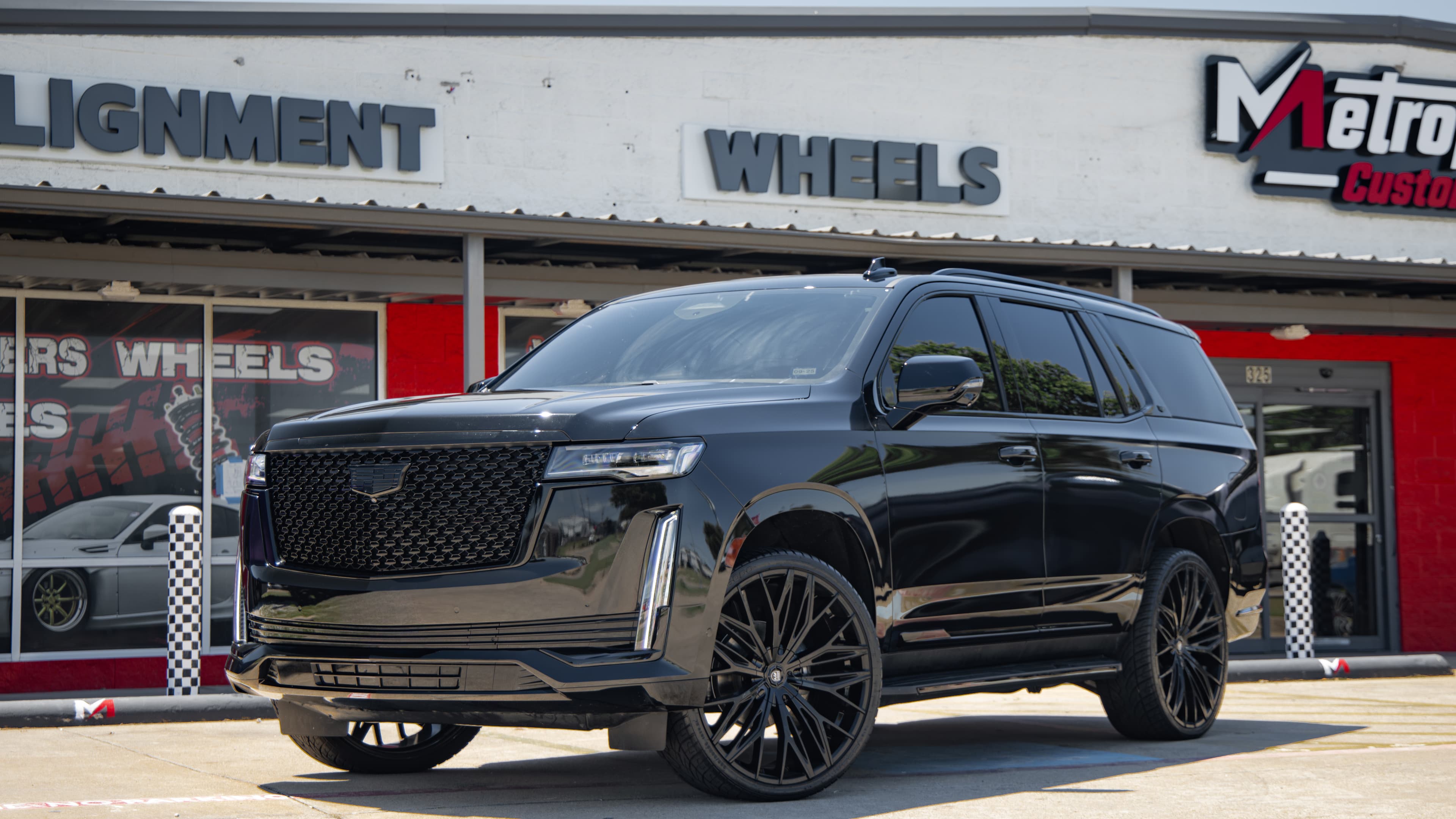
Heat-forming around window seals is what separates a 2-year chrome delete from a 7-year one. When vinyl sits against window rubber without proper heat activation, the rubber's natural oil leeches into the adhesive and causes delamination. We heat every seal-adjacent edge to 180°F+ to activate the adhesive's high-tack chemical bond. That's why our window surround deletes look factory-fresh years later, while DIY and budget-shop jobs start lifting in months.
The Process
Trim Assessment
We catalog every chrome piece on your vehicle, identify which can be removed for off-vehicle wrapping, and discuss your finish preferences.
Surface Decontamination
Chrome surfaces are cleaned with isopropyl alcohol and adhesion promoter applied to edges and recesses where vinyl meets rubber or plastic.
Precision Wrapping
Each trim piece is heat-formed to OEM contours, tucked behind seals where access allows, and post-heated at every termination point.
Final Inspection
Every edge is inspected under multiple angles. Transition points between vinyl and rubber are sealed, and reassembled trim is torqued to spec.
Avoid These Pitfalls
Common Mistakes We Fix
Chrome delete seems simple until it fails. These are the issues we correct from other shops and DIY attempts.
Using Plasti-Dip Instead of Vinyl
Plasti-dip peels, fades, and traps moisture against chrome — causing corrosion underneath. It also looks unprofessional up close. Vinyl provides a factory-smooth finish that's truly reversible with no chemical residue.
Cheap Film That Peels in Heat Cycles
Budget vinyl with weak adhesive fails after a few Dallas-Fort Worth heat cycles (60°F nights to 105°F days). Cast vinyl from Avery Dennison and 3M uses pressure-sensitive adhesive rated for these exact conditions.
Not Edge-Sealing Near Window Rubber
Window rubber contains plasticizers that leech into vinyl adhesive over time, causing edge lifting. We apply 3M 94 adhesion promoter at every rubber-adjacent termination and heat-seal the edge to activate the chemical bond.
Stretching Instead of Heat-Forming
Vinyl stretched over a curve stores elastic tension. In summer heat, that tension releases — and the vinyl pulls back from edges. Heat-forming eliminates tension by reshaping the vinyl's molecular memory to match the contour.
Our Portfolio
Recent Transformations

Got Questions?
Frequently Asked Questions
Get Started
Ready for the
Blackout Look?
Get a free, no-obligation quote for your chrome delete. Tell us your vehicle and which chrome elements you want eliminated — we'll assess the trim and recommend the right package.