
What is a Car Suspension? Key Parts & Costs
Date Published
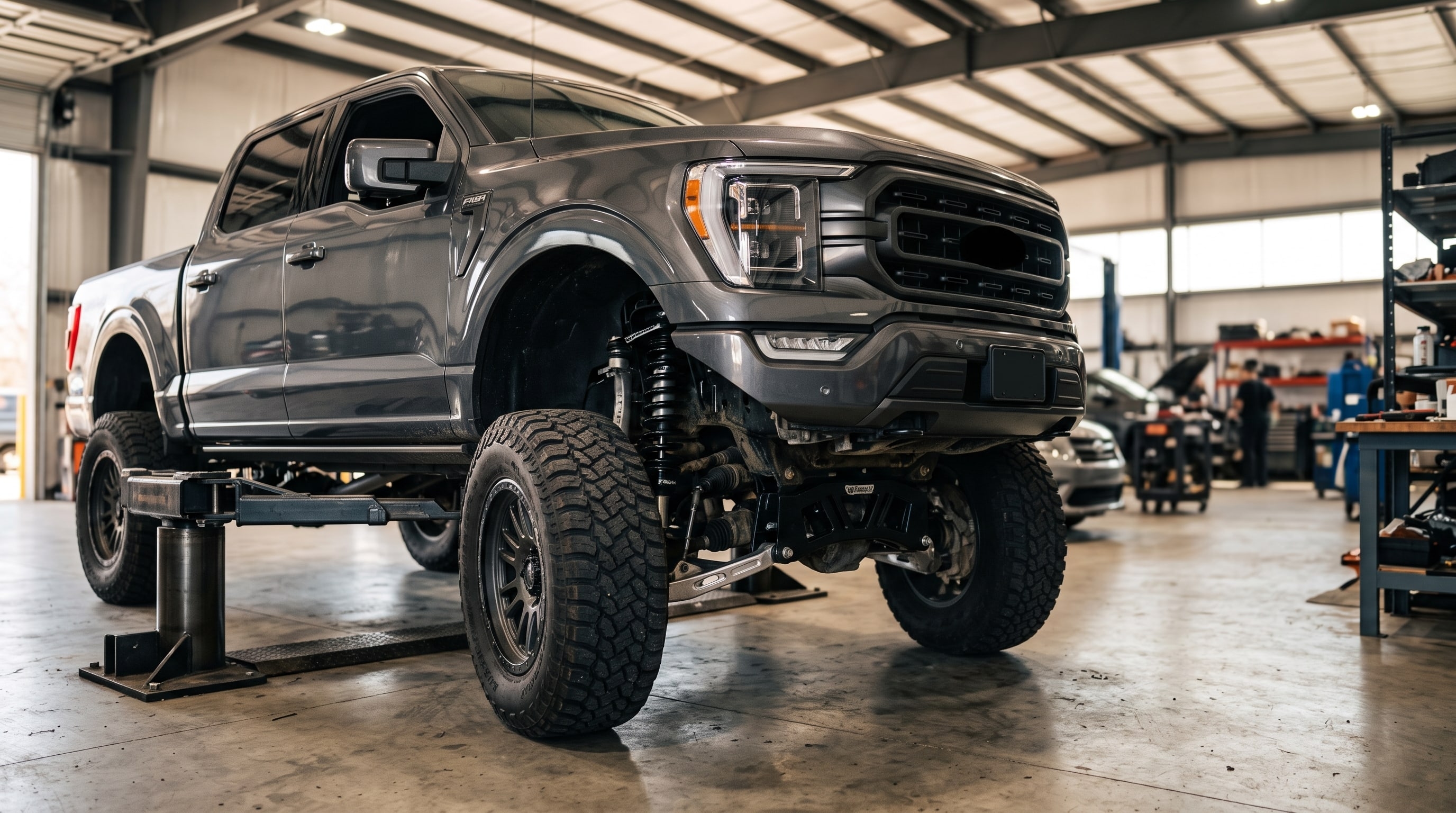
You hit a pothole at 45 mph on the highway, and instead of your car launching into the next lane, you hear a loud thud and keep driving straight. That controlled response happens because a massive network of metal, fluid, and rubber absorbed the impact before it could reach the chassis. Most drivers ignore these parts until the ride gets rough, but understanding your car's suspension helps you catch worn parts before they ruin your tires or make your daily commute miserable.
TL;DR: Your vehicle's suspension is the system of springs, shock absorbers, and linkages connecting the chassis to the wheels.
- It manages road impacts to keep your tires planted firmly on the ground for safe steering and braking.
- Worn suspension components lead to uneven tire wear, a bouncy ride, and longer stopping distances.
What a Suspension System Actually Does
When drivers ask about their suspension, they are referring to the complex network of parts connecting the frame to the axles. This framework supports the heavy weight of the engine and cabin while allowing the wheels to move up and down independently over bumps. A modern car suspension handles two main jobs: keeping the tires in constant contact with the road for traction and isolating the cabin from violent impacts.
We see the difference a good setup makes every day. Take a 2023 Ford F-150 driving over rough expansion joints. Without a functioning suspension for vehicle stability, the rigid frame would bounce the tires right off the pavement after every bump. The suspension absorbs that kinetic energy, letting the axles move while the cab stays relatively flat.
How it works
The core of any car suspension system relies on a push-and-pull relationship between springs and dampers. Springs hold the vehicle up and compress when you hit a bump. However, a spring wants to keep bouncing after it compresses. That is where car shocks and struts come in. These fluid-filled cylinders act as dampers, slowing down the spring's movement and stopping the bounce immediately.
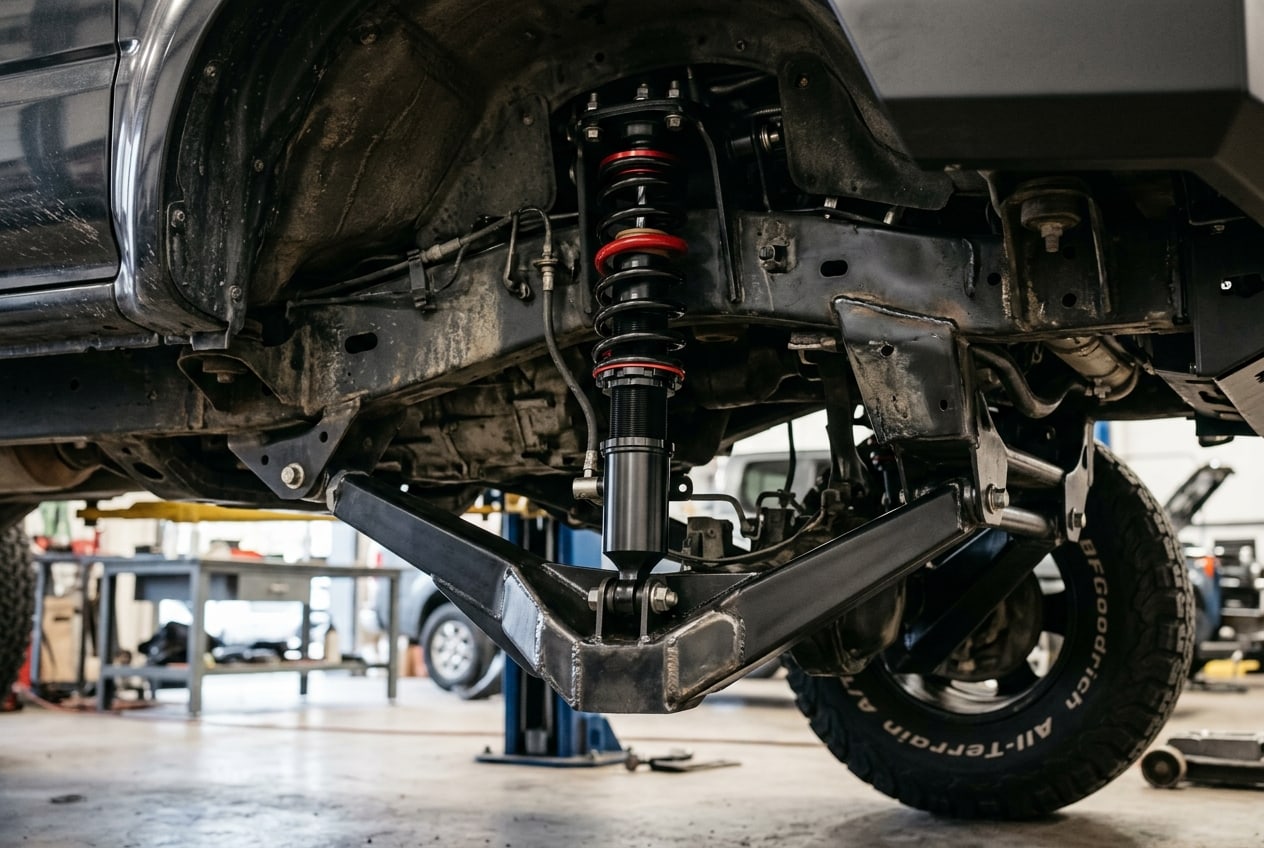
Think of it like a heavy door with a pneumatic closer. The spring is your arm pushing the door open, but the closer (the shock absorber) catches the door and forces it to shut smoothly instead of slamming. Inside the shock, a piston pushes through thick hydraulic oil. The resistance of that oil turns the kinetic energy of the bump into heat, which dissipates into the surrounding air.
Beyond springs and shocks, your suspension system components include control arms, ball joints, and sway bars. Control arms act as hinges connecting the wheel hub to the frame, guiding the wheel's vertical path. Sway bars link the left and right sides of the vehicle together, transferring force during a turn to prevent the body from rolling too far outward.
When you upgrade to air ride suspension, thick rubber airbags replace the traditional steel coil springs. An onboard compressor fills these bags with air, allowing you to adjust the ride height on demand while maintaining that essential damping control.
Why this matters
Ignoring your car suspension parts does more than just make your ride uncomfortable. Worn shocks allow the tire to bounce rapidly like a basketball, which creates cupping wear patterns and destroys a new set of tires in a few thousand miles. Because the tire spends less time physically touching the road, your braking distance increases significantly. At 60 mph, worn struts add up to 10 feet to your stopping distance.
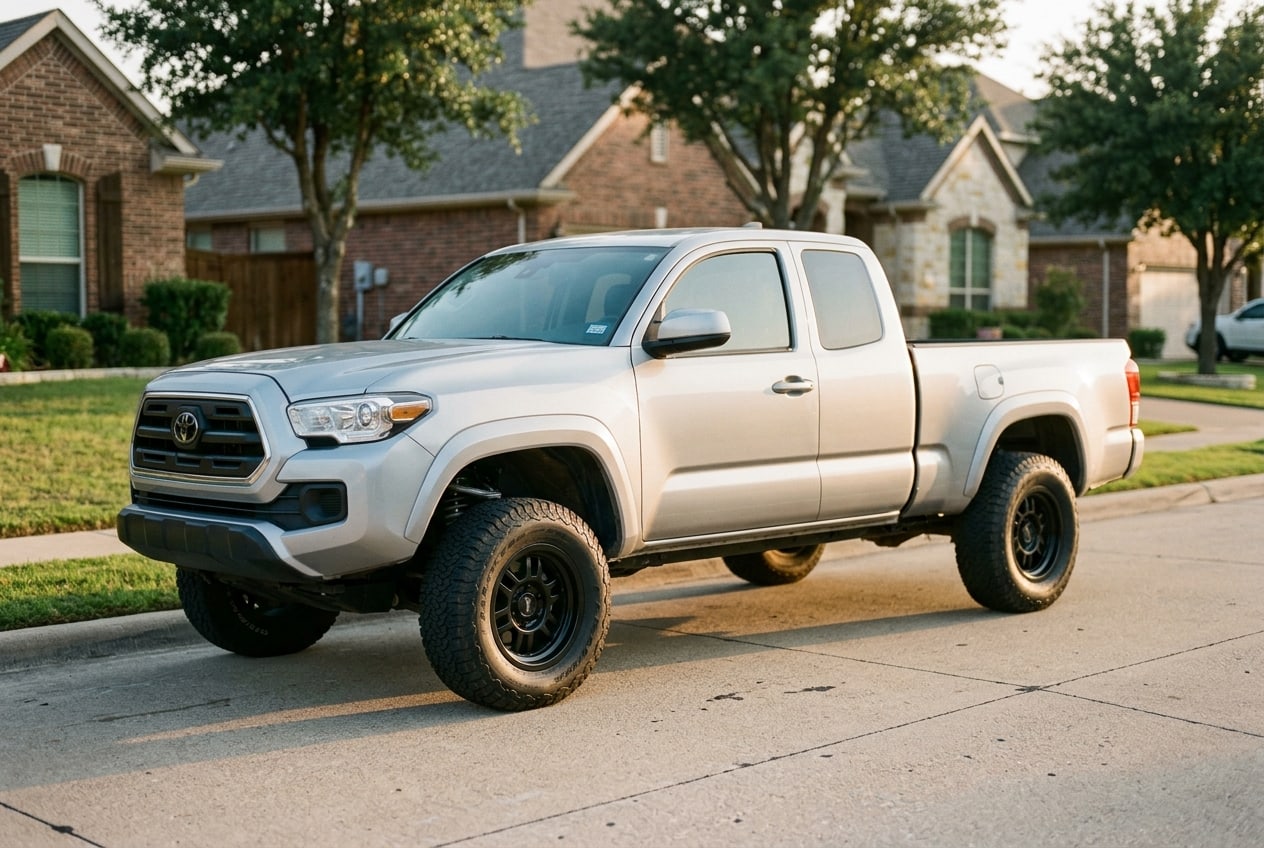
The price to replace struts or shocks is far lower than the cost of replacing prematurely ruined tires, bent control arms, or dealing with an accident caused by poor handling. Most factory shocks degrade noticeably around the 50,000-mile mark. Heat, heavy loads, and rough roads accelerate that wear. Catching a leaking shock early keeps the rest of the suspension geometry intact. We regularly swap blown factory shocks for heavy-duty units from Eibach or BDS to fix these exact issues.
Common misconceptions
- Myth: Shocks and struts only affect ride comfort. Correction: Their primary job is safety by keeping the tire tread firmly pressed against the pavement for steering and braking.
- Myth: You only need to replace the broken shock. Correction: You should always replace shocks and struts in pairs (front or rear) to maintain balanced handling and predictable braking.
- Myth: A stiffer suspension always handles better. Correction: If a setup is too stiff for the road conditions, the tires will skip over bumps and lose traction entirely.
Frequently Asked Questions
What is the average strut replacement cost?
The strut replacement cost generally ranges from $600 to $1,200 for a pair, depending on the vehicle. Luxury vehicles or trucks with adaptive damping systems cost more, while standard commuter cars fall on the lower end of that range.
How do I know if my suspension is failing?
The most obvious signs include the vehicle nose-diving when you hit the brakes, leaning heavily in corners, or bouncing more than twice after going over a speed bump. You might also notice a clunking noise over bumps or visible fluid leaking down the side of the shock body.
Can any auto shop fix suspension issues?
While basic mechanics can swap a shock, a dedicated truck suspension shop in Irving has the specific alignment racks and geometry knowledge to ensure the vehicle drives straight after the repair. We install and align complex setups daily, ensuring every control arm and tie rod is properly torqued at ride height.
Metroplex Customs — Irving, TX
325 S Belt Line Rd, Irving, TX 75060
Call (972) 399-0378 — Fixing Rides Since 2016. Ask about Acima no-credit-needed financing.
Get My Free QuoteComments
No comments yet. Be the first to comment!