Suspension System Explained: How Your Vehicle Rides
Date Published
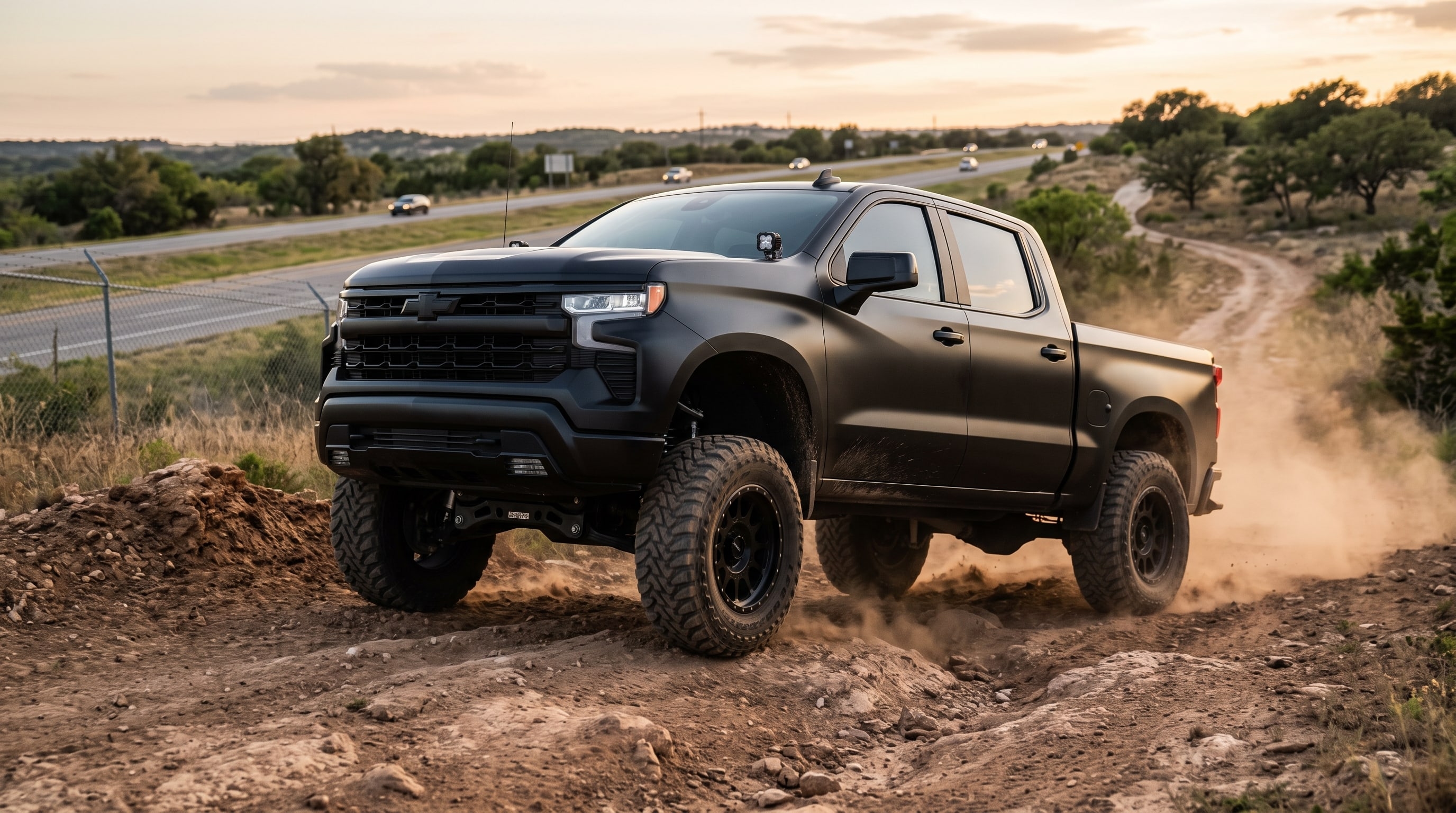
You are doing 70 mph down the highway and hit a massive bridge expansion joint. Your tires slap the concrete, the chassis dips slightly, and you keep driving straight without spilling your coffee. That controlled stability happens because your vehicle's suspension system absorbs the violent upward force before it reaches the cabin.
TL;DR: A suspension system connects a vehicle to its wheels, isolating the cabin from road impacts while keeping the tires pressed firmly against the pavement.
- Springs support the vehicle's weight and absorb sudden bumps.
- Shocks and struts control the spring's movement so the car stops bouncing.
What a suspension system actually is
Think of this setup as the mechanical bridge between your frame and the road. It consists of tires, springs, shock absorbers, and linkages that work together to manage energy. Our team in Irving sees hundreds of these setups every month, from factory designs to full aftermarket upgrades.
Take a 2024 Silverado 1500 on 35s. The heavy truck needs a way to handle deep ruts and highway chatter without breaking axles or shaking the driver to pieces. The suspension components take the beating so the frame and passengers do not.
How it works
The process starts the millisecond your tire hits a bump. Upward kinetic energy forces the wheel toward the wheel well. A metal coil spring compresses to absorb that sudden spike in energy, allowing the tire to move up while the body stays relatively flat.
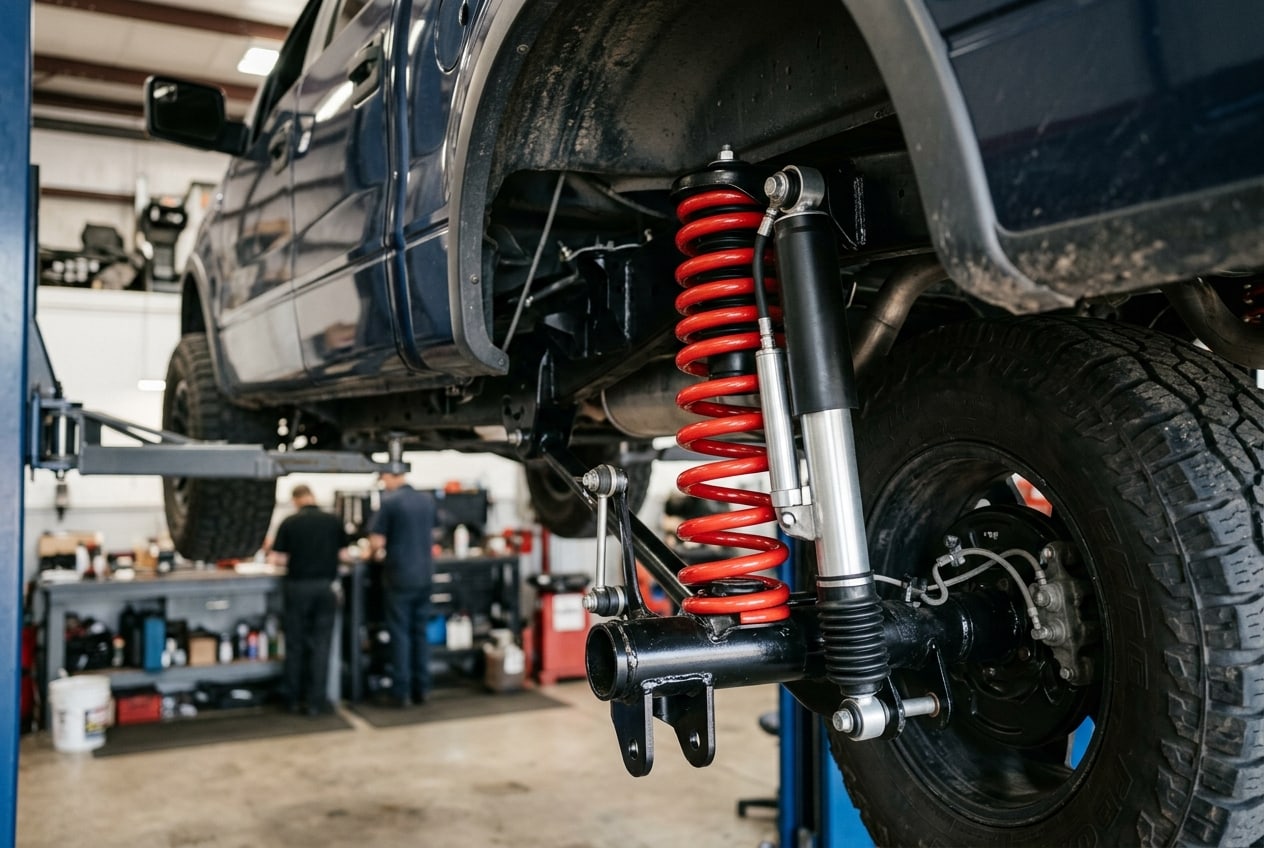
A compressed spring immediately wants to snap back and keep bouncing. This is where the shock absorber steps in. Shocks use internal hydraulic fluid forced through tiny valves to slow down the spring's movement.
Imagine catching a heavy medicine ball. Your arms act as the springs by bending backward to absorb the weight. Your muscles act as the shocks, controlling that backward motion so you do not fall over.
Linkages and sway bars tie everything together across the chassis. They keep the wheels properly aligned and prevent the vehicle from rolling excessively during tight corners. If you notice poor cornering, our car suspension specialists can inspect these linkages for wear.
Why this matters
Safety depends entirely on keeping your tires in contact with the pavement. If a worn-out system allows the tires to bounce off the road after a bump, you cannot steer or brake effectively. A bouncing tire drastically increases your stopping distance.

Comfort and longevity also take a massive hit when parts fail. Every unabsorbed impact transfers directly into the vehicle frame, causing interior rattles, uneven tire wear, and stress cracks in metal components. Ignoring a bouncy ride usually leads to replacing expensive tires months ahead of schedule.
Upgrading these parts changes how the vehicle behaves entirely. We install kits from brands like Rough Country, BDS, and KW to fine-tune exactly how a truck or car handles heavy loads or aggressive cornering. You can explore our truck suspension options to see what fits your specific build.
Common misconceptions
- Stiffer always means better handling. Overly stiff springs on a daily driver cause the tires to skip over bumps instead of tracking the road surface.
- Shocks support the weight of the vehicle. Springs hold the vehicle up; car shocks simply control how fast those springs compress and rebound.
- An alignment fixes a bad ride. Alignments correct tire angles, but they cannot fix the clunks or bounces caused by blown struts or torn bushings.
Frequently Asked Questions
What is the average price to replace struts?
The strut replacement cost typically ranges from $600 to $1,200 per pair, depending on the make and model. Luxury vehicles or trucks with electronic damping systems cost significantly more to service. If the total catches you off guard, ask about our Acima financing options.
How do I know if my car suspension parts are failing?
Look out for excessive bouncing after hitting a dip, fluid leaking down the side of your shock absorbers, or a heavy clunking noise over speed bumps. A vehicle that nose-dives hard under heavy braking also indicates worn front components.
Should I go to a general mechanic or a dedicated suspension shop?
A specialized suspension shop understands the exact geometry required for custom setups, lifted trucks, and lowered cars. General mechanics handle factory replacements, but our shop has seen countless botched lift kits that require a specialist to correct. We routinely fix geometry issues on everything from basic leveling kits to complex air ride suspension systems.
Metroplex Customs — Irving, TX
325 S Belt Line Rd, Irving, TX 75060
Call (972) 399-0378 — Fixing Rides Since 2016. Ask about Acima no-credit-needed financing.
Get My Free QuoteComments
No comments yet. Be the first to comment!