
Is Air Suspension Reliable for Daily Driving in 2026
Date Published
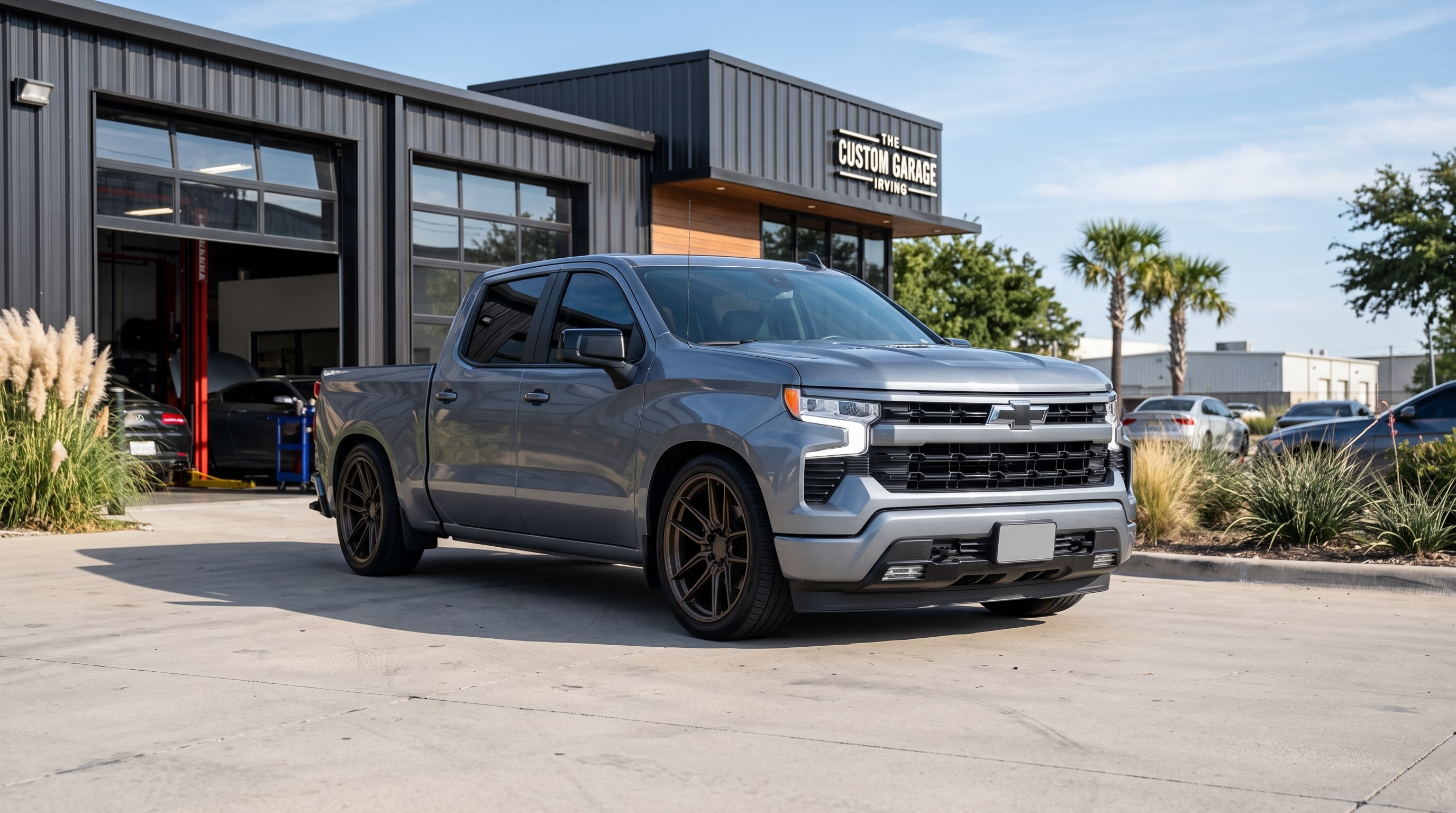
Our team in Irving fields the same question every week from guys looking to bag a 2024 Silverado 1500 or drop a street build. People want the stance, but they hesitate on the trigger because they ask, is air suspension reliable for a daily driver? With constant road construction creating uneven surfaces and debris on major highways, having adjustable ride height is a massive safety advantage. But surviving extreme summer heat and daily pothole strikes requires a system built right the first time.
TL;DR:
- What we install: Full air ride systems, height-based management, and moisture traps to prevent manifold freezing.
- Who it is for: Daily drivers, tow rigs, and custom builds needing adjustable clearance for rough roads.
- Ballpark cost: Complete kits installed run $3,500 to $7,000 depending on the vehicle and management system.
What this service involves
Modern air suspension replaces your factory steel coil springs with heavy-duty rubber air bags, controlled by an onboard compressor and air tank. We install systems that use height-based sensors to automatically compensate for passenger weight and cargo. This eliminates the guesswork of older pressure-only setups that would leave your truck sagging on one side if you loaded the bed unevenly.
In states like Texas, where annual safety inspections for non-commercial vehicles were abolished as of January 1, 2025, the legal shift places the full duty of maintaining safe suspension components directly on the owner. You need a setup that holds air, tracks straight, and handles expansion-joint chatter on aging interstates without constant tinkering.
Who needs it
- Tow rigs and work trucks: Drivers needing expert air ride suspension installation to keep the rear level when hauling heavy trailers or equipment.
- Daily driven street trucks: Owners looking for reliable truck lowering options that still clear steep driveways and construction zones on the morning commute.
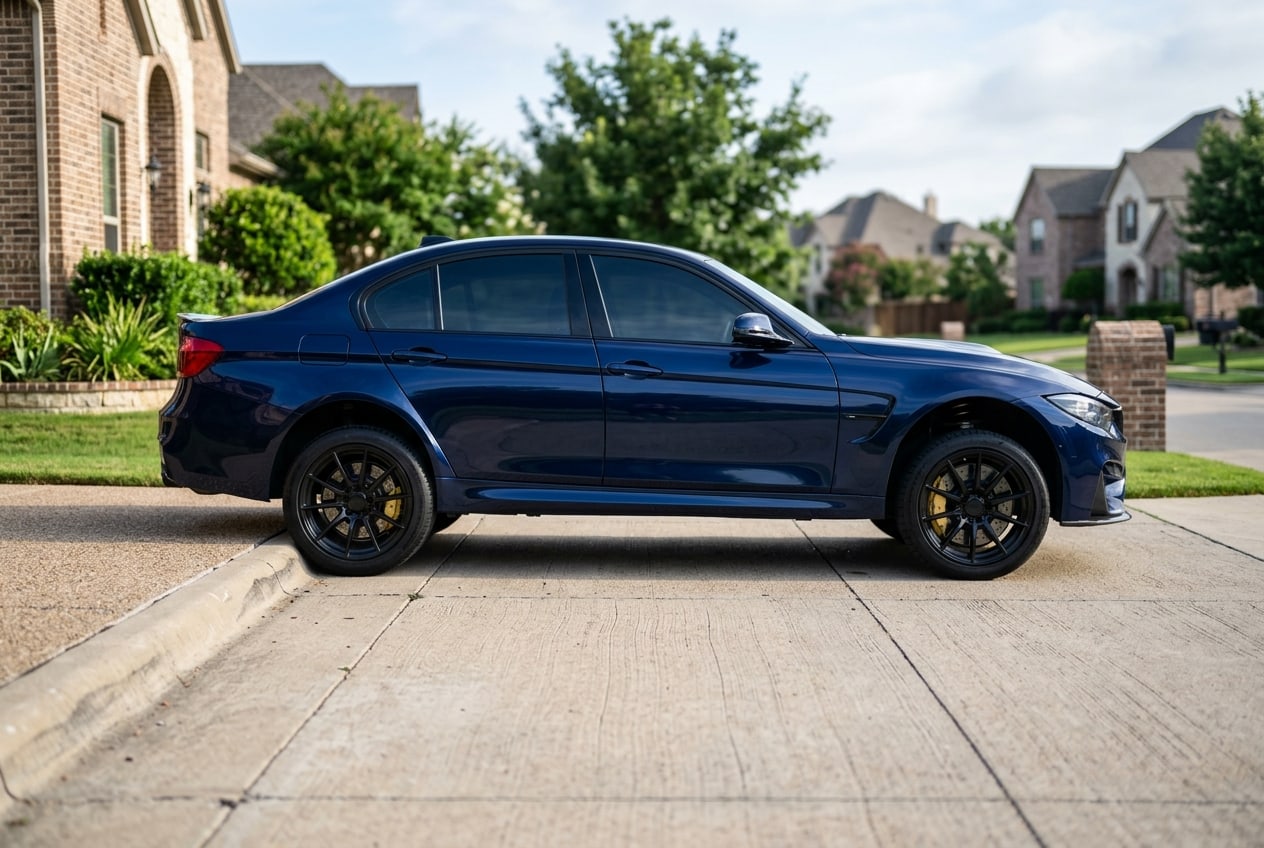
- Performance cars: Enthusiasts who want aggressive fitment at the meet but need an extra two inches of clearance to get home without scraping the oil pan.
Our exact process
- Baseline assessment: We inspect your chassis, measure factory clearances, and plan the routing for airlines away from exhaust heat and moving parts.
- Hardware installation: Our technicians remove the factory springs and shocks, bolting in the vehicle-specific air bags and upgraded dampers.
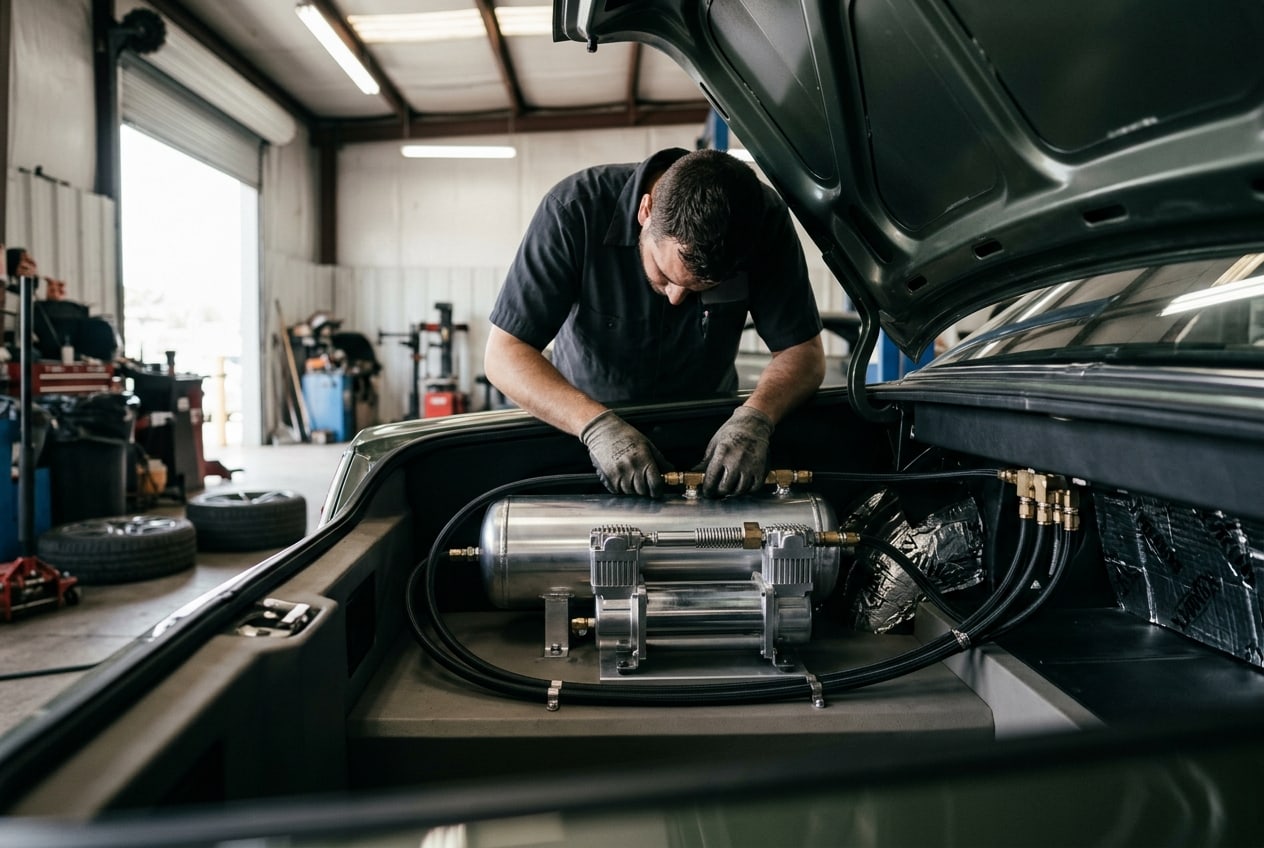
- Air management and plumbing: We mount the compressors, tank, and manifold. We specifically install water traps to manage moisture and prevent the system from freezing during unexpected cold snaps.
- Calibration and leak testing: We program the height sensors, set your preset ride heights, and pressure-test the entire system to guarantee zero leaks before it leaves the bay.
Brands and materials we use
We only stock management systems and bags proven to survive punishing summer conditions.
- Air Lift Performance: Their 3H management system uses physical height sensors to maintain exact ride height regardless of load. It is the gold standard for long-term daily use.
- AccuAir: We install the e-Level+ ECU upgrade for precise control and fast leveling. It is a highly dependable option for custom builds.
- SMC Water Traps: Hardware we add to the plumbing to catch condensation before it reaches your valves and destroys the internal seals.
Timeline and pricing
A complete air suspension install takes our shop three to five days. We take the time to route lines cleanly and ensure the wiring is protected from road debris.
The management systems alone, like the Air Lift Performance 3H, run $1,800 to $2,400. An AccuAir e-Level+ ECU upgrade falls between $595 and $750. For a complete air ride kit installed, you should budget $3,500 to $7,000 total. If you are ready to build, get a custom air suspension quote and ask our front desk about Acima financing to break that cost into manageable payments.
Frequently Asked Questions
Does extreme heat damage air suspension bags?
Summer temperatures exceeding 105 degrees accelerate the degradation of rubber components. We recommend inspecting your air bags monthly for dry rot, cracks, and UV damage to catch wear before a blowout occurs.
How often do I need to drain the air tank?
Even with water traps installed, you should drain your air tank manually every three to four weeks. Compressing humid air creates water, and keeping that moisture out of the manifold is the best way to prevent valve failure.
Are air bags better than coilovers for daily driving?
Air bags offer superior versatility if you drive through heavily constructed areas. Coilovers provide a slightly firmer, track-focused feel, but air allows you to lift the vehicle over hazards instantly while maintaining a smooth ride on the highway.
Metroplex Customs — Irving, TX
325 S Belt Line Rd, Irving, TX 75060
Call (972) 399-0378 — Fixing Rides Since 2016. Ask about Acima no-credit-needed financing.
Get My Free QuoteComments
No comments yet. Be the first to comment!